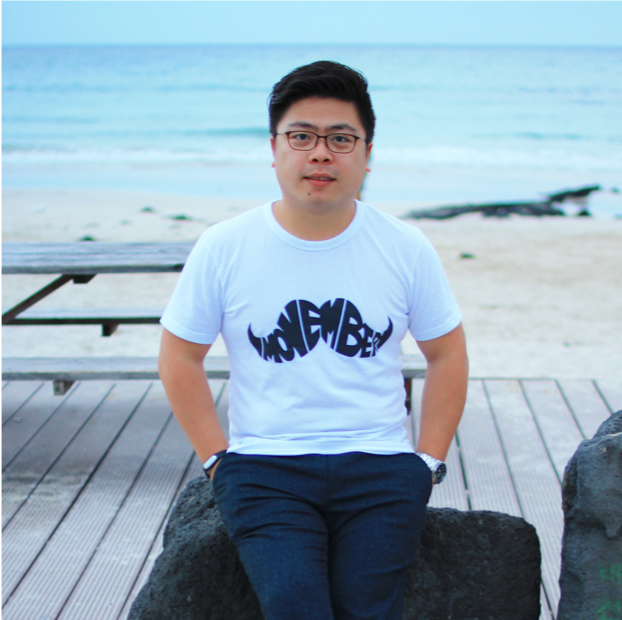
Hongfan Shen
Brain Researcher & Engineer
Seoul, Korea
Profile - About Me
- Sep. 13, 1986
- Seoul, Korea
- +82 10-6405-6384
- hfshen.github.io
I'm happy to introduce myself to you. I was born at Jilin Prov., China. For now, I'm working as a freelancer.
I had move to Korea at Mar. 2nd. 2007. Finish my BA at department of Electronic Engineering at Kwang-Woon Univ., Seoul. for Master degree I moved to department of Brain and Cognitive Engineering at Korea Univ., Seoul. I also finished my Ph. D coursework at the same department with Prof S. Lee from Korea Univ. and Prof. Daniel Kersten from University of Minnesota. I had experience on Engineering part of aquisition and analysing Brain(EEG, fMRI) data. also, experienced on human Vision at Psychology part. Thank you for comming.


NEUROGAZER
Contribute to the progress of neuroscience and lead the innovation in neurobusiness so that people can face better future.
KC Scholarship Association
This Association is helping junior and high school students who has problem with home environment and hard to keep going on study.
KC-winwin Associantion
A Think Tank gathering of Korean and Chinese people, Korean & Chinese, and compatriots and friendly people who are willing to discuss, plan, and implement the development of individual members together.
Resume - Personal Info
-
Research Assistant 2017.12 - 2019.07
Neurogazer Inc.
Assisting Research Team of Prof. Daeyeol Lee(Yale Univ.) at NEUROGAZER Inc. Marketing Brain service for children in Korea. Developed participant management system and Acquisited MRI data with more than 4 hundred from age 10 to 15.
-
New Business Developer 2016.3 - 2017.11
Sejong Telecom Inc.
Developing MVNO, AI, CCTV, Proposal 4th MNO at Korea ...
-
PhD Researcher (Project) 2013 - 2015
Korea University
1. Fund by MSIP of Korea. Academic Research Center of Postech. This research goal is develop basic software in human-level lifelong machine learning (Machine Learning Center).
2. Fund by NRF of Korea. This research aims to develop a technology for vehicle driving and automatic emergency situation perception with only brain signals.
3. Fund by LG Display, This project aims to develop an interface that can be using bio-signal~(EEG,EMG,EOG) to control TV and smartphone in realtime.
-
PhD candidate of Brain and Cognitive Engineering 2013.8 - 2015.8
Korea University (4.13/4.5)
Specialized in using Pattern Recognition and Machine Learning algorithm analysing EEG, fMRI, and fNIRS in human brain.
-
Master of Brain and Cognitive Engineering 2011.2 - 2013.8
Korea University (4.17/4.5)
Specialized in fMRI study in visual perception area.
-
Bechelor, Major in Electronic Engineering and Minor in Industrial Psychology 2007.2 - 2011.2
Kwang-woon University (3.04/4.5)
Specialized in Semiconductor and Electroencephalography.
-
Bechelor Major in Commerce and Trade 2005.6 - 2006.6
Shanghai Jiaotong University (Retired)
-
Organization for Human Brain Mapping 2014.06
Specialized in vision perception
J. Mehnert, H. Shen, S.-W. Lee, H. Boyaci, K.-R. Muller, and D. Kersten, Event-Related Desynchronzation in Response to Surface Lightness Change.
-
Vision Sciences Society, Tradewinds Island Resorts St. Pete Beach, Florida, USA 2014.05
Specialized in vision perception
H. Shen, D. Mannion, S.-W. Lee, and D. Kersten, Accuracy in Localising the Centre of a Circle.
-
Brain and AI Symposium, High1 Resort, Korea 2014.02
Human internal noise
H. Shen, D. Mannion, D. Kersten, and S.-W. Lee, Effect of Centroid Estimation on Calculation Efficiency and Equivalent Noise.
-
Master Thesis @Korea University 2013.08
Contour of Objects Affects Lightness Perception and Responses in Primary Visual Cortex
Supervisors: Seong-Whan Lee (Korea University) & Daniel Kersten (University of Minnesota). This thesis explored the idea that retinotopically localized cortical lightness responses would be reduced by contour cues which were consistent with the perceptual explanation of smoothly changing three-dimension surface orientation. We found an unexpectedly higher response to Cylindrical than Rectangular stimuli in localized, physically constant stimulus regions.
-
Vision sciences Society, Naples, Florida, USA 2013.05
Specialized in fMRI in visual cortex
H. Shen, D. Mannion, S.-W. Lee, H. Boyaci, F. Fang, and D. Kersten, Effect of Smooth Shape on Lightness Processing in Human Visual Cortex.
-
Brain and AI Symposium, High1 Resort, Korea 2013.02
Specialized in fMRI in visual cortex
H. Shen, D. Mannion, D. Kersten, and S.-W. Lee, Does Neural Activity in Early Visual Areas Show a Similar Modulation by 3D Shape?
-
The 12th China-Japan-Korea Joint Workshop on Neurobiology and Neuroinformatics(NBNI), Korea University, Seoul, Korea 2012.11
Specialized in fMRI in visual cortex
H. Shen, D. Mannion, D. Kersten, and S.-W. Lee, Effect of Object Contours on Lightness Processing in Human Visual Cortex.
-
The 4th International Symposium on Brain and Cognitive Engineering, Korea University, Korea 2012.05
Specialized in fMRI in visual cortex
H. Shen, D. Kersten, and S.-W. Lee, Lightness Perception Changes by Object Contour.
-
Brain and AI Symposium, Deogyusan Resort, Korea 2012.02
Specialized in vision perception
H. Shen, D. Kersten, and S.-W. Lee, Context Effects in Luminance Judgments of Complex Objects
-
BrainKorea21plus Scholarship 2013 - 2015
National Research Foundation(NRF) of Korea
-
WCU scholarship, University of Minnesota, 80 days 2013.05-07
National Research Foundation(NRF) of Korea
-
Oneasiaclub scholarship(APRO) 2013.02
One Asia Club Seoul
-
WCU scholarship, University of Minnesota, 40 days 2012.06-07
National Research Foundation(NRF) of Korea
-
3rd Daewoong Foundation Scholarship 2011.06
Daewoong Foundation
Contact - Contact Me
- Adress: Seoul, Korea
- hshen86@gmail
- Phone: +82.10.6405.6384
- Wechat: hfshen